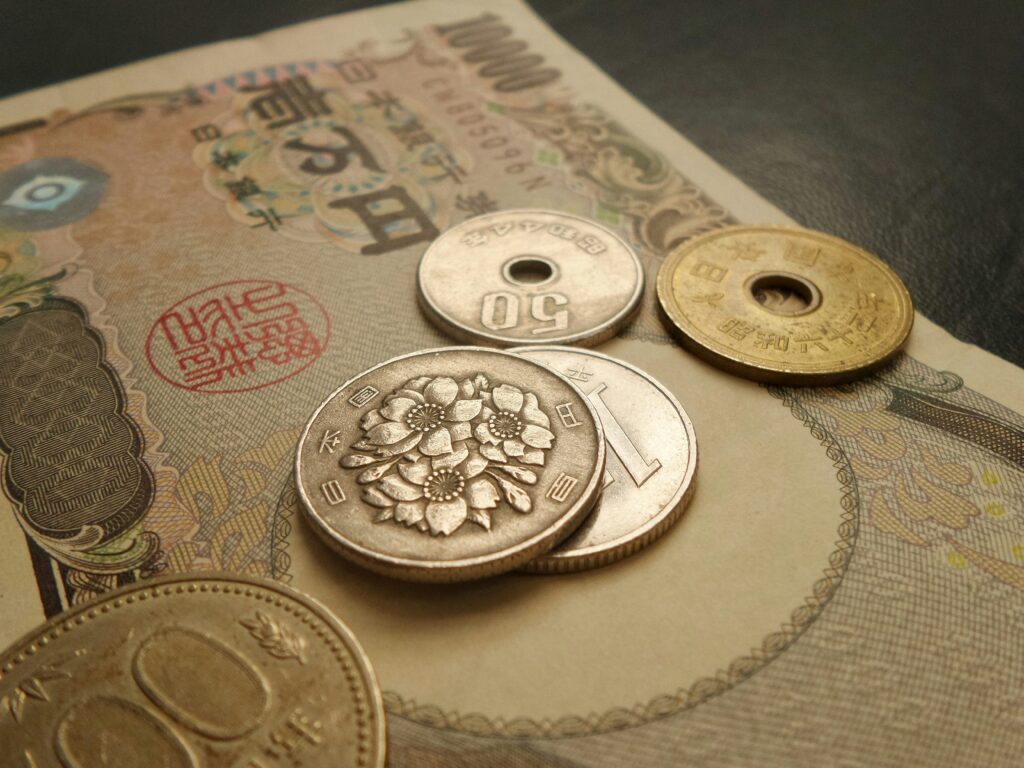
If you are weighing Wise vs Remitly Japan options to move money in or out of the country, you are asking exactly the right question before sending a single yen. Both services are far cheaper than a traditional Japanese bank wire, but they are built for very different jobs. Wise is a multi-currency account and transfer service designed around the real exchange rate, while Remitly is a remittance specialist built for sending money home to family. Pick the wrong one for your situation and you can lose ¥5,000–¥15,000 on a single transfer without realizing it. This guide breaks down fees, exchange rates, speed, limits, and which service wins for each common expat scenario in 2026.
The short version: if you are sending money to a bank account in a developed country (the US, UK, EU, Australia) or you want to hold and spend multiple currencies, Wise is usually the better and cheaper choice. If you are sending money home to the Philippines, India, Indonesia, Nepal, or Vietnam — especially for cash pickup or a mobile wallet — Remitly often has the edge. Read on for the full picture.
Contents
- 1 Wise vs Remitly Japan: The Quick Answer
- 2 What Wise Is and How It Works in Japan
- 3 What Remitly Is and How It Works in Japan
- 4 Wise vs Remitly Japan: Fees and Exchange Rates Compared
- 5 Transfer Speed and Delivery Options
- 6 Sending Limits and Holding Caps in Japan
- 7 Which Currencies and Countries Each Covers
- 8 Wise vs Remitly Japan: Which Should You Choose?
- 9 How to Get Started
- 10 Frequently Asked Questions
- 11 Final Thoughts
Wise vs Remitly Japan: The Quick Answer
Here is a side-by-side overview of Wise vs Remitly Japan before we dig into the details. Use this as a cheat sheet, then check the sections below for the reasoning.
| Feature | Wise | Remitly |
|---|---|---|
| Best for | Bank-to-bank transfers, holding currencies, freelancers, spending abroad | Sending money home, cash pickup, mobile wallets |
| Exchange rate | Real mid-market rate, no markup | Mid-market rate plus a markup (roughly 0.5%–3%) |
| Fees | Transparent upfront fee, ~0.4%–1.5% from Japan | Flat fee plus FX markup; varies by corridor |
| Speed | Usually 1–2 business days | Express: minutes; Economy: 3–5 days |
| Multi-currency account | Yes (40+ currencies) | No |
| Debit card | Yes (¥1,200 one-time) | No |
| Send limit from Japan | Up to ¥150,000,000 per transfer (funded from a bank) | ¥1,000,000 per transfer |
| Cash pickup option | No | Yes, in many countries |
What Wise Is and How It Works in Japan
Wise (formerly TransferWise) is a multi-currency account and international transfer service. Its core selling point is the real mid-market exchange rate — the same rate you see on Google — with a transparent fee shown upfront. There is no hidden markup baked into the exchange rate, which is where banks and many remittance apps quietly make their money.
In Japan, Wise operates through Wise Payments Japan, which is licensed by the Kanto Local Finance Bureau as a registered funds transfer service provider. In 2024 Wise obtained a Type 1 license, which removed the old ¥1,000,000 per-transaction cap on outgoing cross-border transfers and allowed it to join the Zengin domestic payment network for near-instant yen transfers within Japan.
Here is what Wise gives you as a resident of Japan:
- A multi-currency account that holds 40+ currencies, including a JPY balance. You can receive foreign income, convert at the real rate, and withdraw to your Japanese bank.
- Local account details in several major currencies (USD, GBP, EUR, AUD and more), so overseas clients or employers can pay you as if you had a local account in their country.
- A Wise debit card (Mastercard) that costs a one-time ¥1,200 to order, with no monthly or annual fee. Note that the Japan-issued Wise card does not work with Apple Pay or Google Pay, which surprises a lot of new users.
- Transparent fees that average around 0.67% for transfers out of Japan, compared with the 2%–4% hidden markups (and sometimes more) that Japanese banks charge.
Wise is available to residents of Japan regardless of nationality. One caveat: US citizens and permanent residents may face extra documentation requirements because of FATCA reporting rules.
What Remitly Is and How It Works in Japan
Remitly is a dedicated remittance service. Founded in 2011, it was built specifically to help people working abroad send money home quickly and affordably. It is not a bank account and it does not offer a card or a multi-currency wallet — it does one thing, which is move money from A to B, and it does that thing in a lot of countries.
From Japan, Remitly supports transfers to 175+ countries, with particularly strong coverage in classic remittance corridors such as the Philippines, India, Indonesia, Nepal, Vietnam, and Mexico. The standout feature is the range of delivery methods: depending on the destination, your recipient can get the money as a bank deposit, a cash pickup at a local agent, a mobile wallet top-up (such as GCash in the Philippines), or in some places home delivery.
Remitly offers two transfer speeds:
- Express — funded by debit or credit card, usually arriving within minutes. This is the convenient, time-sensitive option, though the total cost can be higher.
- Economy — funded by a bank transfer, taking around 3–5 days, typically with lower fees.
Unlike Wise, Remitly does not use the pure mid-market rate. It charges a transfer fee plus an exchange rate markup that generally ranges from about 0.5% to 3% over the mid-market rate, depending on the corridor, delivery method, and amount. New customers usually get a promotional rate on their first transfer, so your first send will look cheaper than your regular ongoing cost.
Wise vs Remitly Japan: Fees and Exchange Rates Compared
This is the heart of the Wise vs Remitly Japan decision, because fees and exchange rates together determine how much actually lands in the recipient’s account.
Wise separates the two cleanly. You always get the real mid-market rate, and you pay a visible fee — typically somewhere in the 0.4%–1.5% range for transfers from Japan, shown before you confirm. Because there is no rate markup, the price you see is the full price. For larger transfers, the percentage fee shrinks, which makes Wise especially strong for sending bigger sums.
Remitly bundles its cost into two parts: a flat transfer fee (which can be zero on some corridors or larger amounts) plus a markup hidden inside the exchange rate. This makes Remitly harder to compare at a glance, because a “no fee” transfer can still cost you through a weaker rate. The markup tends to be smallest on high-volume corridors like the Philippines and India, and larger on less common routes.
The practical rule of thumb: for bank-to-bank transfers to developed countries, Wise almost always wins on total cost. For sending smaller amounts to a major remittance corridor — especially with a first-transfer promo — Remitly can occasionally match or beat Wise. The only way to be sure is to get a live quote from both apps for your exact amount, currency, and delivery method, since the cheapest option genuinely shifts by corridor.
Transfer Speed and Delivery Options
Speed is where the two services diverge based on how they are built.
Wise transfers usually complete within 1–2 business days, and a good share arrive within hours or even minutes when everything verifies smoothly. However, Wise only delivers to bank accounts — there is no cash pickup. Domestic yen transfers inside Japan are near-instant now that Wise is on the Zengin network.
Remitly’s Express option is the fastest of either service for many corridors, often landing in the recipient’s account or wallet within minutes. And crucially, Remitly can deliver in ways Wise cannot — cash pickup, mobile wallets, and home delivery. If your recipient does not have a bank account, or strongly prefers cash, Remitly is the only realistic choice of the two.
So the speed comparison is really a delivery comparison: Wise is fast for bank deposits; Remitly is fast and flexible for the kinds of payouts common in remittance-heavy countries.
Sending Limits and Holding Caps in Japan
This is an area where Japan-specific rules matter, and where a lot of expats get tripped up.
Wise limits for Japan residents:
- You can send up to ¥150,000,000 equivalent per transfer when the transfer is funded from an external Japanese bank account or card (this routes through Wise’s Type 1 license).
- If you pay directly from your Wise balance, the limit is ¥1,000,000 per transfer under the Type 2 rules.
- There is a holding cap of ¥1,000,000 equivalent across all currencies in your Wise account at any one time. Anything above that must be moved out to a bank account in your own name. This is the main reason Wise cannot serve as your primary salary account in Japan.
Remitly limits from Japan:
- The per-transfer sending limit from Japan is ¥1,000,000. There are also rolling limits over 24 hours, 30 days, and 180 days, and you can request an increase with additional verification.
The takeaway: if you need to move a large lump sum at once — say a property deposit or a chunk of savings — Wise is the only one of the two that can handle it in a single transfer.
Which Currencies and Countries Each Covers
Wise supports sending to 140+ countries and holding 40+ currencies, with a strong focus on direct bank delivery. It shines on routes between developed economies: JPY to USD, GBP, EUR, AUD, CAD, and so on.
Remitly reaches 175+ countries with a wider variety of payout methods, and its real strength is the developing-country corridors where cash pickup and mobile money dominate. If you are supporting family in Southeast Asia, South Asia, Africa, or Latin America, Remitly’s network is broader and more flexible on the receiving end.
Wise vs Remitly Japan: Which Should You Choose?
Rather than crowning a single winner, match the service to your situation. Here is how the Wise vs Remitly Japan choice usually shakes out:
Choose Wise if you:
- Send money to a bank account in the US, UK, EU, Australia, or another developed country
- Are a freelancer or remote worker receiving income from overseas clients
- Want to hold and spend multiple currencies, or want a debit card for travel and online shopping
- Need to send a large amount in one transfer
- Value seeing the exact, all-in cost before you send
Choose Remitly if you:
- Send money home to the Philippines, India, Indonesia, Nepal, Vietnam, or a similar corridor
- Have a recipient who needs cash pickup or a mobile wallet rather than a bank deposit
- Want the fastest possible delivery and are willing to pay a little more via Express
- Are making a first transfer and can take advantage of the promotional rate
Many expats in Japan end up using both: Wise for receiving foreign income, holding currencies, and larger bank-to-bank transfers, and Remitly for monthly family remittances to a home country where cash or mobile payout matters. They are not really competitors so much as tools for different jobs.
Before you commit to either, it is worth understanding the wider landscape of options — our overview of the best money transfer services for Japan expats compares these two against other providers. And since both services require a Japanese bank account to fund transfers efficiently, make sure you have read our guide to opening a bank account in Japan as a foreigner first.
How to Get Started
Setting up either service is straightforward and free to begin.
For Wise:
- Download the app or sign up at the Wise website.
- Complete identity verification using your residence card or My Number card. Names, dates of birth, and addresses must match exactly across all documents.
- Add a JPY balance and, optionally, order the debit card (¥1,200).
- Fund transfers from your Japanese bank account by furikomi or debit card.
For Remitly:
- Create an account in the app or on the website.
- Choose your destination country, amount, and delivery method.
- Select Express or Economy and enter your recipient’s details.
- Pay with a debit/credit card or bank transfer, and track the transfer to delivery.
Verification for both is usually quick, but allow 1–2 business days the first time in case additional documents are requested.
Frequently Asked Questions
These are the questions expats ask most often when sorting out the Wise vs Remitly Japan decision.
Is Wise or Remitly cheaper for sending money from Japan?
For bank-to-bank transfers to developed countries, Wise is almost always cheaper because it uses the real mid-market rate with a transparent fee. For smaller amounts to major remittance corridors like the Philippines or India, Remitly can sometimes be competitive, especially with its first-transfer promotion. Always compare a live quote for your exact transfer.
Can I use Remitly to send money out of Japan?
Yes. Remitly supports sending money from Japan to 175+ countries, with a per-transfer limit of ¥1,000,000. You can fund transfers with a debit or credit card (Express) or a bank transfer (Economy).
Can Wise be my main bank account in Japan?
No. Wise limits Japan residents to holding ¥1,000,000 equivalent across all currencies at any one time, so it cannot hold a full month’s salary. Most expats keep a Japanese bank account for salary and use Wise for international transfers and spending.
Does Remitly offer a debit card or multi-currency account?
No. Remitly is a remittance-only service with no card and no account to hold money. If you want to hold multiple currencies or spend with a card, Wise is the option that offers those features.
Which is better for receiving freelance income in Japan?
Wise, clearly. Its local account details let overseas clients pay you in their currency, after which you convert to yen at the real rate and withdraw to your Japanese bank. Remitly does not support this use case.
Final Thoughts
The Wise vs Remitly Japan decision is less about which service is “best” and more about what you are trying to do. Wise is the transparency-and-bank-transfer champion — ideal for freelancers, multi-currency holders, larger transfers, and routes between developed countries. Remitly is the remittance specialist — unbeatable when your recipient needs cash pickup, a mobile wallet, or instant delivery to a high-volume corridor. For many people living in Japan, the smartest move is to keep both apps and use whichever one wins for each specific transfer.
Whichever you choose, you will save dramatically compared with a traditional Japanese bank wire. The Wise vs Remitly Japan answer really comes down to your destination and how your recipient wants the money — so remember to compare a live quote each time, since the cheapest option shifts by corridor and amount. Have a question about moving money in or out of Japan, or a topic you would like us to cover next? Get in touch — we are always happy to help fellow expats navigate life in Japan.